A construction loan for modular home builds in California is a short-term loan that pays for your land, foundation, factory modules and site work while the home is being built. Once the home is finished and inspected, it converts to or is replaced by a standard 30-year mortgage. Because modular homes sit on a permanent foundation, they qualify for the same loans as site-built houses. If you are still weighing the full price picture, start with our modular home cost guide.
Key Takeaways
- Construction loan first: it funds the build in stages, then becomes a regular mortgage.
- Modular qualifies like site-built: conventional, FHA, VA and USDA loans all apply once the home is on a permanent foundation.
- Down payment varies: conventional construction loans often want 20 to 25 percent, while FHA can start near 3.5 percent.
- One-time close saves fees: it combines construction and mortgage into a single loan with one set of closing costs.
- Modular is not manufactured: the loan rules are different, and modular gets the better treatment.
What a Construction Loan Actually Does
A normal mortgage pays for a home that already exists. A modular home does not exist yet when you start, so you need a loan that pays builders along the way. That is a construction loan.
The lender releases money in stages, called draws, as each phase is finished: land, foundation, module delivery, site work and final finishing. During construction you usually pay interest only on the money drawn so far, which keeps early payments lower. Because the lender is taking on build risk, a construction loan generally carries a slightly higher rate than a finished-home mortgage.
This article explains how these loans work in plain terms. It is general information, not lending advice, so confirm any numbers with a licensed California lender. If you want help lining up a build timeline against your financing, call us at (888) 637-8238.
One-Time Close vs Two-Time Close
There are two ways to structure the loan, and the choice affects your costs and paperwork.
- One-time close (construction-to-permanent): one loan, one application, one set of closing costs. It funds the build, then automatically converts to your permanent mortgage. Most modular buyers prefer this because it locks your rate early and you only close once.
- Two-time close: a separate construction loan, then a second loan to pay it off once the home is done. You close twice and pay two sets of fees, but you can shop for the best permanent mortgage at the end.
Mortgage investors such as Fannie Mae construction financing allow both one-close and two-close structures for eligible homes, so ask your lender which one fits your budget and timeline.
Loan Types You Can Use in California
Because a modular home is real property on a permanent foundation, it is eligible for the main loan programs. Here is how they compare.
| Loan type | Typical minimum down | Best for |
|---|---|---|
| Conventional construction | 20 to 25 percent | Buyers with strong credit and savings |
| FHA construction | Around 3.5 percent | Lower down payment, flexible credit |
| VA construction | Often 0 percent | Eligible veterans and service members |
| USDA construction | Often 0 percent | Qualifying rural California lots |
These are common lender minimums, not guarantees. Your actual terms depend on credit, income and the lender, so treat these as a starting point.
Down Payments, Rates and Monthly Cost
Three things drive what you pay on a construction loan: the down payment, the interest rate during construction, and the final mortgage rate when it converts.
Conventional construction loans in California often ask for 20 to 25 percent down because the lender wants a cushion against build risk. Government programs are gentler: an FHA construction loan can start near 3.5 percent down, and VA and USDA options can reach zero down for those who qualify.
During the build you typically pay interest only on the funds drawn, so your payment grows as more of the loan is released. Once the home passes final inspection and the loan converts, you move to a normal principal-and-interest payment. Ask your lender to model both the interest-only construction phase and the permanent payment so there are no surprises.
What Lenders Ask For Before Approval
A construction loan is reviewed more closely than a normal mortgage, because the lender is paying for a home that does not exist yet. Expect to provide more paperwork up front.
Most lenders ask for proof of income and assets, your credit history, details on the land, and a signed contract with your builder. Many also want the full plans, a detailed cost breakdown and a build schedule before they set the loan amount.
The appraisal is also different. The appraiser values the home based on the plans and specifications, as if it were already finished. That is why a clear, complete scope from your builder matters. Missing items can lower the appraised value or leave gaps the loan does not cover.
If you already own your lot, ask whether its value can count toward your down payment. Many lenders allow this, which can lower the cash you need to bring to closing.
How Draws Work on a Modular Build
A draw is a payment the lender releases as work is completed. On a site-built home, draws usually follow on-site milestones such as foundation, framing and roofing.
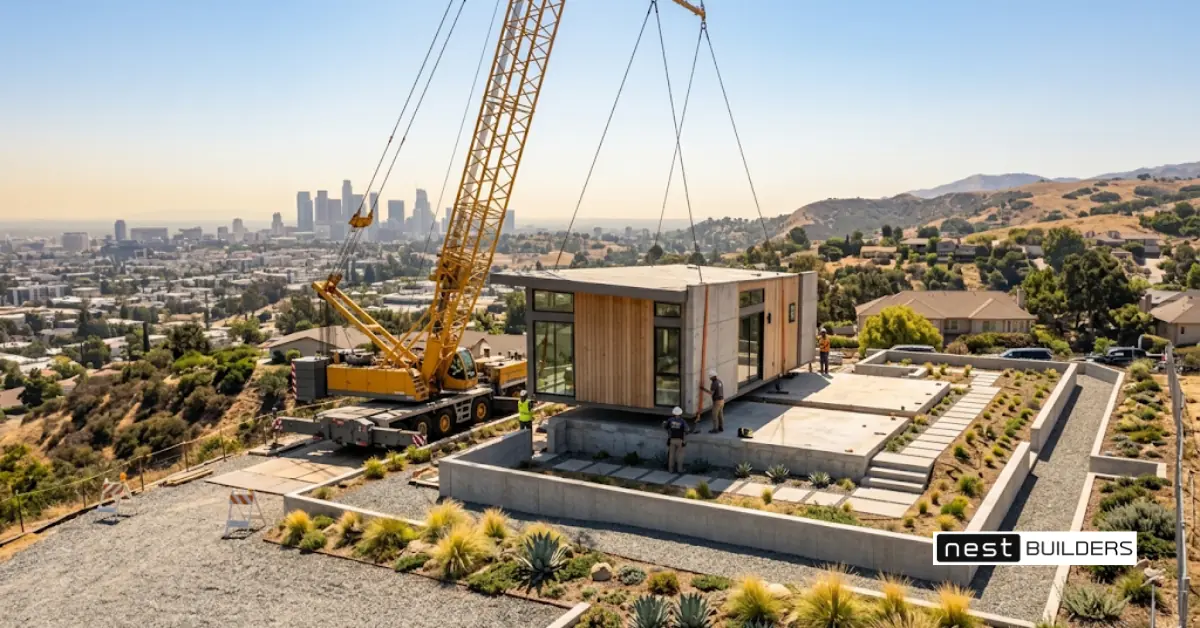
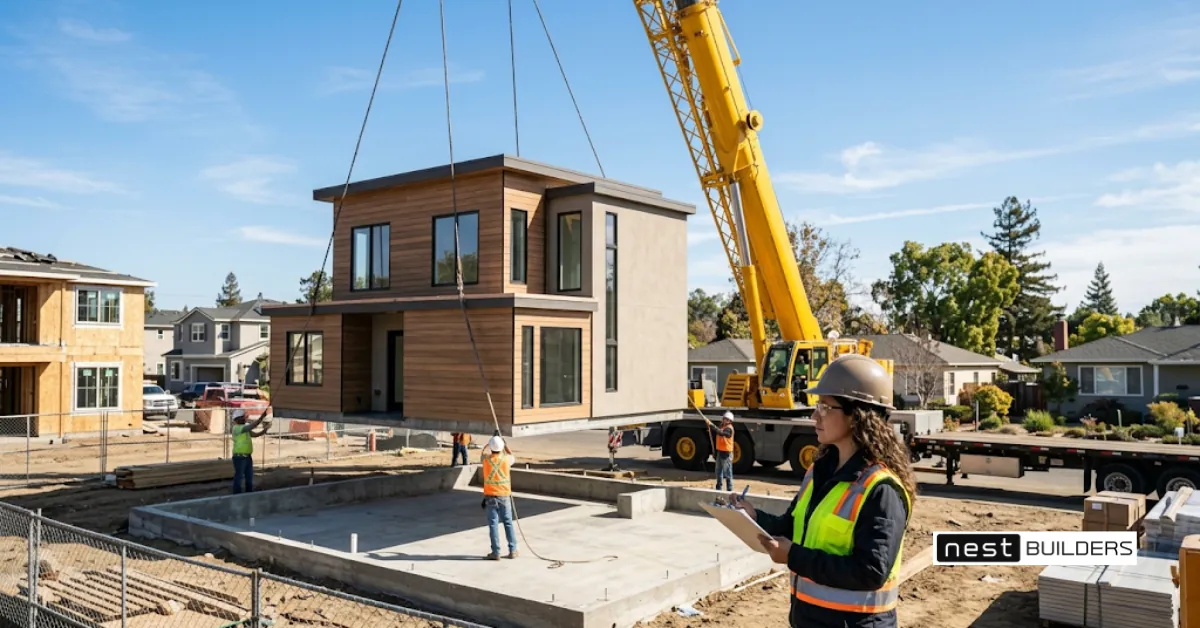
Modular builds work a little differently, because a large share of the home is built in the factory before anything arrives at your lot. Factories often require a deposit before production starts and payment before the modules ship.
Ask your lender early how they handle factory payments. Some lenders are used to modular draw schedules and some are not. Matching the lender’s draw schedule to the builder’s payment schedule before closing avoids delays later.
Modular vs Manufactured: Why the Loan Is Different
This is the part that trips buyers up. Modular and manufactured homes are financed very differently.
- Modular homes are built to the same state and local building code as site-built homes and attach permanently to a foundation. They are treated as real property, so they get standard construction and mortgage loans.
- Manufactured homes are built to the federal HUD code on a steel chassis. They sometimes rely on a chattel loan, similar to a vehicle loan, unless they are permanently affixed. Federal programs like HUD manufactured home financing exist for these cases.
The takeaway: a true modular home gives you access to better loan terms than a manufactured home, because it is legally a house, not a vehicle. If you want the difference spelled out, read our modular vs manufactured guide.
Steps to Finance a Modular Build
- Get pre-approved. Talk to a lender who finances modular construction and learn your budget before you fall in love with a plan.
- Lock your land. You will usually need the lot, or a plan to buy it, to size the loan.
- Choose one-time or two-time close. Match the structure to your rate outlook and closing budget.
- Get a fixed build quote. Lenders want a clear contract price, which is easier with a modular builder who handles design, permits and construction together.
- Close and draw. The loan funds in stages as the build hits each milestone.
Construction Loan for Modular Home FAQs
How hard is it to get a construction loan for a modular home?
It is similar to any new-build loan. Because a modular home is real property on a permanent foundation, lenders treat it like a site-built house. Strong credit, verifiable income and a clear contract price make approval straightforward.
Do you have to put 20 percent down on a construction loan?
Not always. Conventional construction loans often want 20 to 25 percent, but FHA can start near 3.5 percent, and VA or USDA options can reach zero down for borrowers who qualify.
What banks give loans for modular homes?
Many national lenders, credit unions and local California banks offer modular construction loans. The key is choosing one that understands modular is code-built real property, not a manufactured or mobile home.
What is the average interest rate on a modular home loan?
Rates move with the market and your credit. Construction loans usually run slightly higher than finished-home mortgages, then convert to a standard rate once the home is complete. Ask lenders for current quotes.
Line Up Financing With Your Build
Financing goes smoother when your builder can hand the lender a clear scope, a fixed price and a realistic schedule. Call Nest Builders at (888) 637-8238 and we will give you a build plan and quote your lender can work from. You talk to our build team, not a call center. Free consultation, serving the Bay Area, Sacramento, Los Angeles and San Diego.
Nest Builders
100 Shoreline Hwy, Suite 100, Bldg B
Mill Valley, CA 94941
Phone: (888) 637-8238
Email: info@nestbuilders.co
Web: https://nestbuilders.co/
License: CSLB# 1117837, HCD# DL1611393
Serving the Bay Area, Sacramento, Los Angeles and San Diego
Hours: Mon to Sun, 9:00 AM to 5:00 PM
Nest Builders is a licensed California home builder (CSLB# 1117837, HCD# DL1611393) that designs, permits and builds custom and modular homes across California. This article is general information, not lending or financial advice. Learn more on our about us page.