Prefab vs Modular vs Manufactured Homes: What California Buyers Should Know
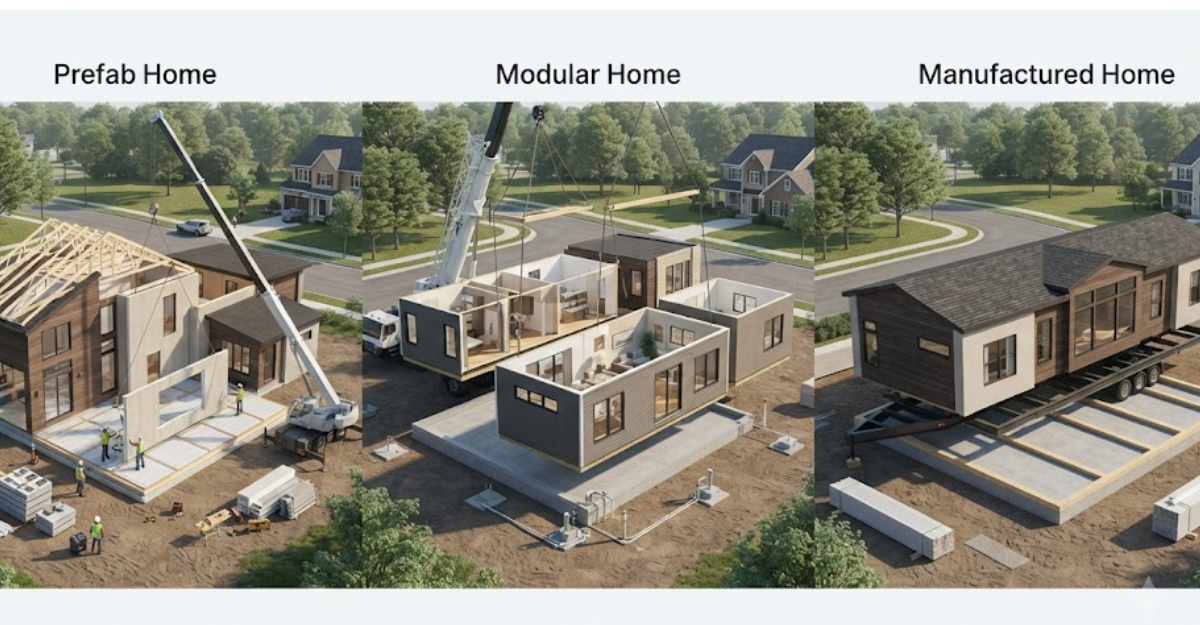
Prefab vs modular vs manufactured is mostly a question of building code. Prefab is the umbrella term for any home built partly in a factory. Modular homes follow the California building code and sit on a permanent foundation. Manufactured homes follow a federal HUD code and are built on a steel chassis. See Nest Builders home designs for examples of modular plans.
Key Takeaways
- Prefab is a category, not a type. Modular, manufactured, panelized and kit homes are all prefab.
- Modular follows the state code. In California, it meets the same standards as a site-built house.
- Manufactured follows the HUD code. It is built on a permanent steel chassis.
- Financing follows the code. Modular usually gets a standard mortgage. Manufactured often needs a specialty loan.
- Look for the label. A state insignia or a HUD label tells you exactly what you are buying.
Quick Definitions: Prefab vs Modular vs Manufactured homes
Prefab homes
Prefab is short for prefabricated. It means some or all of the home is built off site, then assembled on your land. It is a broad label. Sellers use it for everything from backyard studios to large custom homes.
Modular homes
A modular home is built in large, finished sections inside a factory. The sections are trucked to your lot and set by crane onto a permanent foundation. In California, the state regulates these as factory-built housing. They must meet the California Building Standards Code, the same code as a stick-built home.
Manufactured homes
A manufactured home is built to a federal standard called the HUD code. Federal rules at 24 CFR Part 3280 define it as a transportable home built on a permanent chassis. Homes built before June 15, 1976, when the HUD code began, are usually called mobile homes.
Other prefab types you may see
- Panelized homes: walls are built as flat panels in a factory, then assembled on site.
- Kit homes: pre-cut materials shipped to your lot for a crew to assemble.
- Container homes: homes made from steel shipping containers, which need careful engineering and permits.
Full Comparison: Prefab vs Modular vs Manufactured
| Feature | Modular | Manufactured | Panelized or kit |
|---|---|---|---|
| Building code | California Building Standards Code | Federal HUD code | California Building Standards Code |
| Label or approval | State factory-built insignia | HUD label on each section | Local permit and inspections |
| Chassis | No chassis | Permanent steel chassis | No chassis |
| Foundation | Permanent foundation | Piers, blocks or foundation | Permanent foundation |
| How much is built in the factory | Most of the home | Almost all of the home | Walls or cut parts only |
| Stories | One or two, sometimes more | Mostly one | One or more |
| Typical loan | Construction loan, then mortgage | Chattel or specialty loan | Construction loan, then mortgage |
| Resale pattern | Tracks nearby site-built homes | Depends on land and foundation | Tracks nearby site-built homes |
How to Tell Which Type a Home Really Is
Listings often use these words loosely. A “prefab” ad can be selling a manufactured home. Use these checks before you compare prices.
Signs you are looking at a manufactured home
- A red HUD label on the outside of each section.
- A steel frame under the floor, sometimes with the hitch removed.
- A data plate inside, often near the electrical panel or a closet.
- Set widths such as single-wide or double-wide.
Signs you are looking at a modular home
- A state insignia from California’s factory-built housing program.
- No chassis and a standard concrete foundation.
- Normal building permits from the city or county.
- Two-story or complex layouts that look like a site-built home.
California’s housing department explains that every factory-built home sold to a first buyer in the state must carry an insignia. The rules are on the HCD factory-built insignia page. If a seller cannot show either label, ask why.
Cost: Which Type Is Cheapest?
Manufactured homes have the lowest upfront price. The U.S. Census Bureau reports the average new manufactured home in California sold for $164,800 in 2025. Single-section homes averaged $80,500 and double-section homes averaged $185,000. Those figures are from the Census manufactured housing data, and they leave out land and site work.
| Home type | Upfront price level | What is usually extra |
|---|---|---|
| Manufactured (single-section) | Lowest | Land, setup, utilities, skirting |
| Manufactured (double-section) | Low | Land, setup, utilities, foundation |
| Panelized or kit | Varies widely | Most labor, finishes, site work |
| Modular | Close to site-built | Land, foundation, crane, utilities, fees |
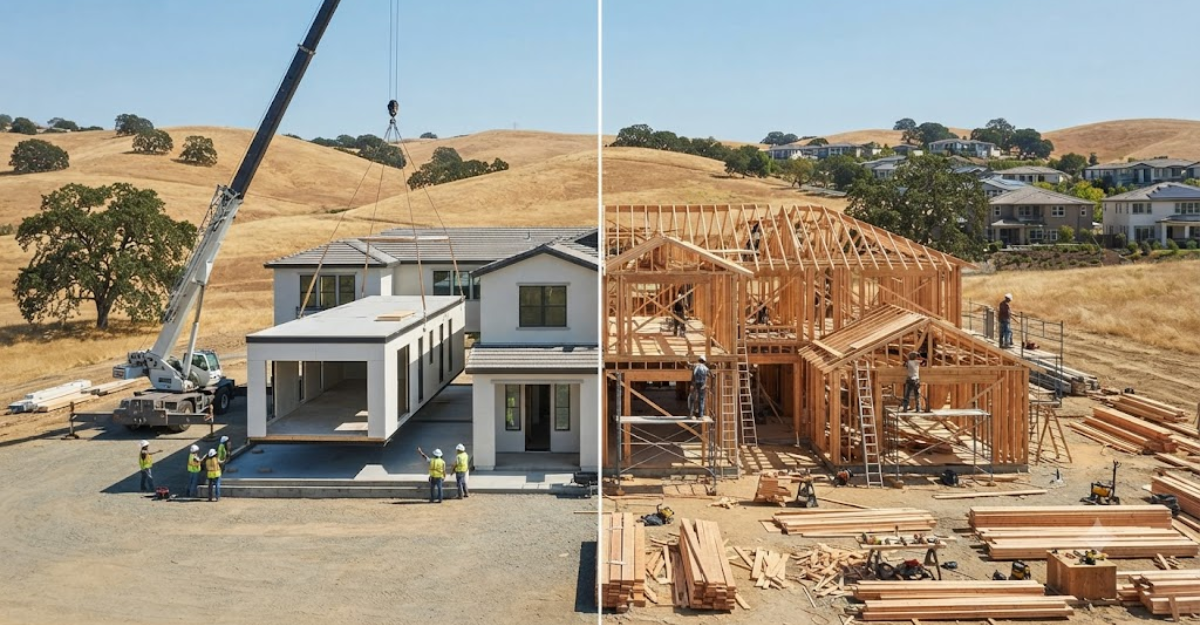
A lower price does not always mean better value. A modular home usually appraises and resells like the homes around it. For a detailed look at how factory building compares with on-site framing, read modular and stick-built compared.
Not sure which type your lot and budget can support? Call Nest Builders at (888) 637-8238. We will explain what fits your zoning, your land and the loan you plan to use.
[Image: california-manufactured-home-prices-2025.webp] Alt: chart of average new manufactured home prices in California in 2025. Caption: Census data covers the home only. Land, setup and site work are extra.
Financing and Resale
The code a home is built to shapes how you pay for it. This is where the three types split the most.
Modular financing
Most buyers use a construction loan that converts to a standard mortgage. Fannie Mae says modular homes have no minimum size or roof pitch rules, and comparable sales do not need to be the same build type. The details are in the Fannie Mae modular guidelines.
Manufactured financing
A manufactured home on leased land or without a permanent foundation is often financed as personal property with a chattel loan. Those loans can carry higher rates and shorter terms. Homes on owned land with a permanent foundation may qualify for other programs, but the rules are stricter.
Resale
- Modular: tends to follow the local market for site-built homes.
- Manufactured on owned land: value leans on the land and foundation.
- Manufactured in a park: the home can lose value because you do not own the land.
Lifespan and Quality
Lifespan depends on the code, the foundation and upkeep. A modular home built to the California code on a permanent foundation is designed to last like a site-built home. Modern HUD-code manufactured homes last far longer than older mobile homes, but they are built to a different standard.
Quality comes down to the builder. Ask to see the factory, ask who does the site work, and ask for a written warranty that covers both.
California Rules to Know Before You Buy
- Zoning: many California cities must allow manufactured homes on single-family lots, but design rules may apply.
- Energy code: modular and site-built homes must meet California’s energy standards, including solar on most new single-family homes.
- Fire zones: homes in high fire hazard areas need ember-resistant materials.
- Permits: modular homes go through local plan check for the foundation, utilities and site. Factory work is reviewed through the state program.
- Taxes: a home on a permanent foundation is taxed as real property.
Which Type Fits Your Goal?
Most buyers do not start with a building code. They start with a goal. Use this table to match the goal to the home type that usually fits best.
| Your goal | Usually the best fit | Why |
|---|---|---|
| Lowest upfront price | Manufactured | Built almost fully in the factory to a federal code |
| Standard mortgage and strong resale | Modular | Permanent foundation and state building code |
| Two-story family home | Modular | Stacked modules and larger layouts are possible |
| Remote lot with poor crane access | Panelized or site-built | Smaller loads are easier to deliver |
| One-of-a-kind architecture | Custom site-built | No module size limits |
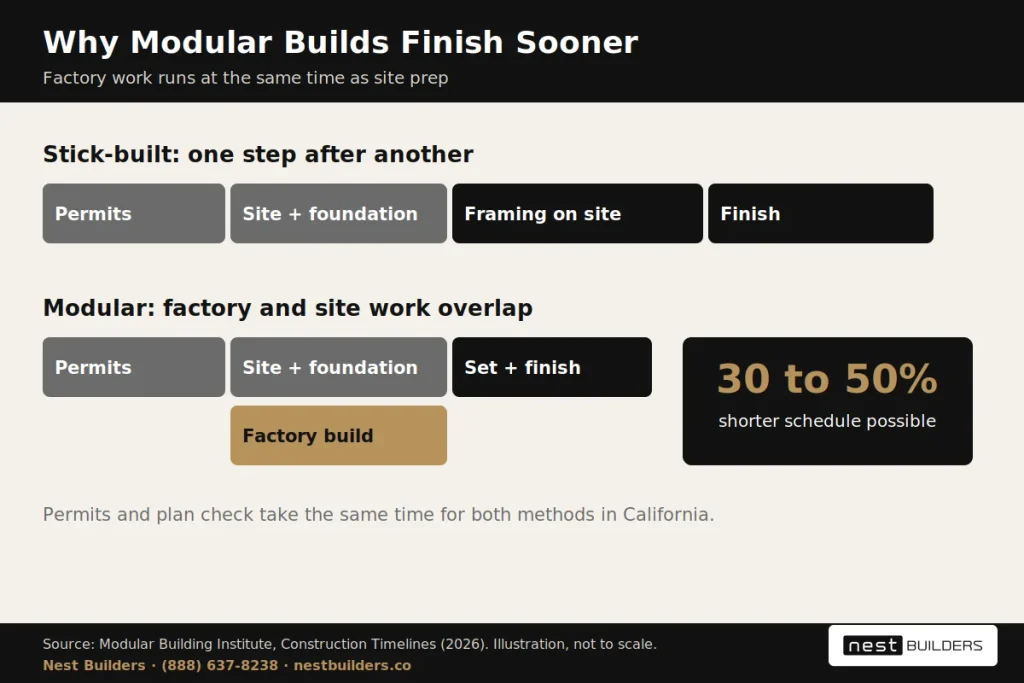
| Fast move-in on a lot you own | Modular | Factory and site work run at the same time |
Questions to Ask Any Prefab Seller
- Which code is this home built to? California building code or the federal HUD code?
- What label will the home carry? A state insignia or a HUD label?
- What foundation does the price assume?
- Who handles permits, site work and utility hookups?
- Which loan types have your past buyers used?
- What does the warranty cover, and for how long?
- Can I see a finished home of the same type?
Clear answers to these seven questions tell you more than any brochure. If a seller avoids the code or label question, walk away.
How to Choose the Right Type
- Start with your land. Do you own a lot, or will the home go in a park or community?
- Set your loan plan. If you want a standard mortgage, modular is the simpler path.
- Decide on size and stories. Two-story or larger family homes point to modular.
- Compare full budgets. Add land, foundation, utilities and fees to every quote.
- Check the label. Confirm the state insignia or HUD label before you sign.
- Vet the builder. Our checklist for choosing a modular builder covers licenses, warranties and site work.
A family that wants a two-story plan, for example, might look at the two-story Sequoia. It offers 1,572 square feet with 3 bedrooms and flexible bonus space upstairs, which is hard to get from a single-section manufactured home.
Prefab vs Modular vs Manufactured FAQs
What is the downside to a prefab home?
The biggest downsides are site access, design limits and confusing labels. A truck and crane must reach your lot, module sizes limit some layouts, and “prefab” can mean very different products. Always check the building code and label before comparing prices.
What is the average lifespan of a prefab house?
It depends on the type. A modular home built to the California code on a permanent foundation is designed to last as long as a site-built home. Manufactured homes built to the HUD code also last decades with good upkeep, but older mobile homes wear out sooner.
Why don’t banks like modular homes?
Most banks do lend on modular homes. The worry usually comes from manufactured homes without a permanent foundation, which are often financed as personal property. A modular home on a permanent foundation is generally treated like a site-built home by lenders and appraisers.
Why do people not like modular homes?
Most concerns come from mixing modular homes up with older mobile homes. Some buyers also worry about resale or limited design. Today’s California modular homes meet the state building code, sit on permanent foundations and can be single-story or two-story with custom finishes.
Is a prefab home the same as a modular home?
Not always. Modular is one type of prefab home. Prefab also includes manufactured, panelized and kit homes. If a seller says “prefab,” ask which code the home is built to and whether it carries a state insignia or a HUD label.
Talk to a California Modular Builder Before You Choose
The right type depends on your land, your loan and how you want to live. Call Nest Builders at (888) 637-8238 and tell us where you want to build. We will explain whether modular or a custom site build fits best, and what it takes to get permitted. You can also browse recent Nest Builders projects.