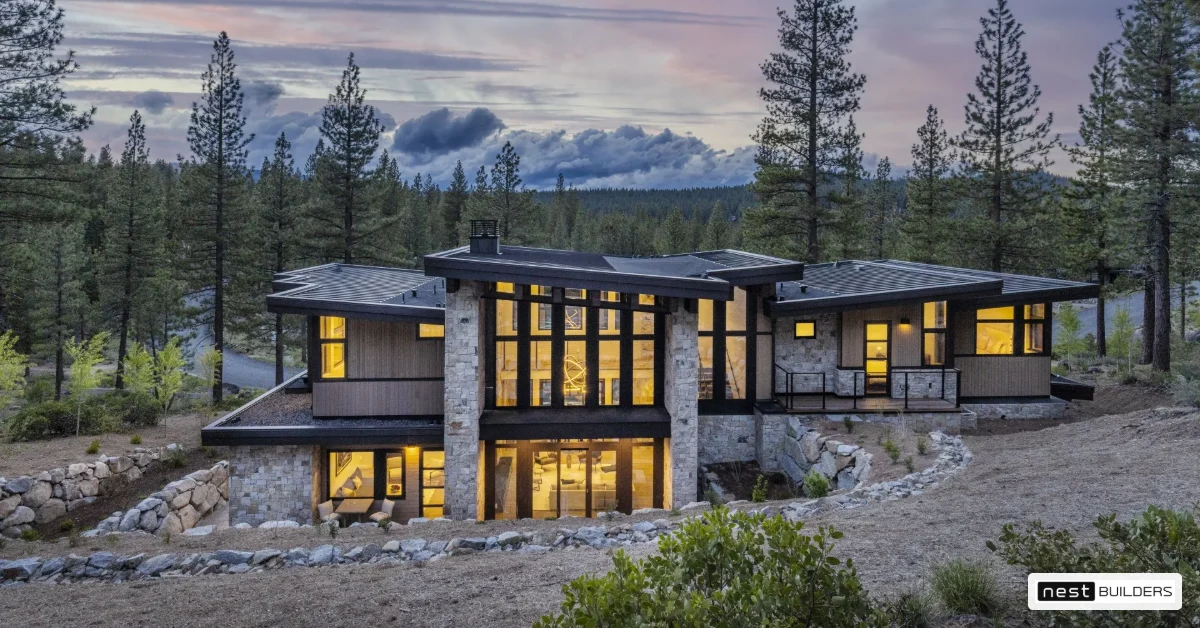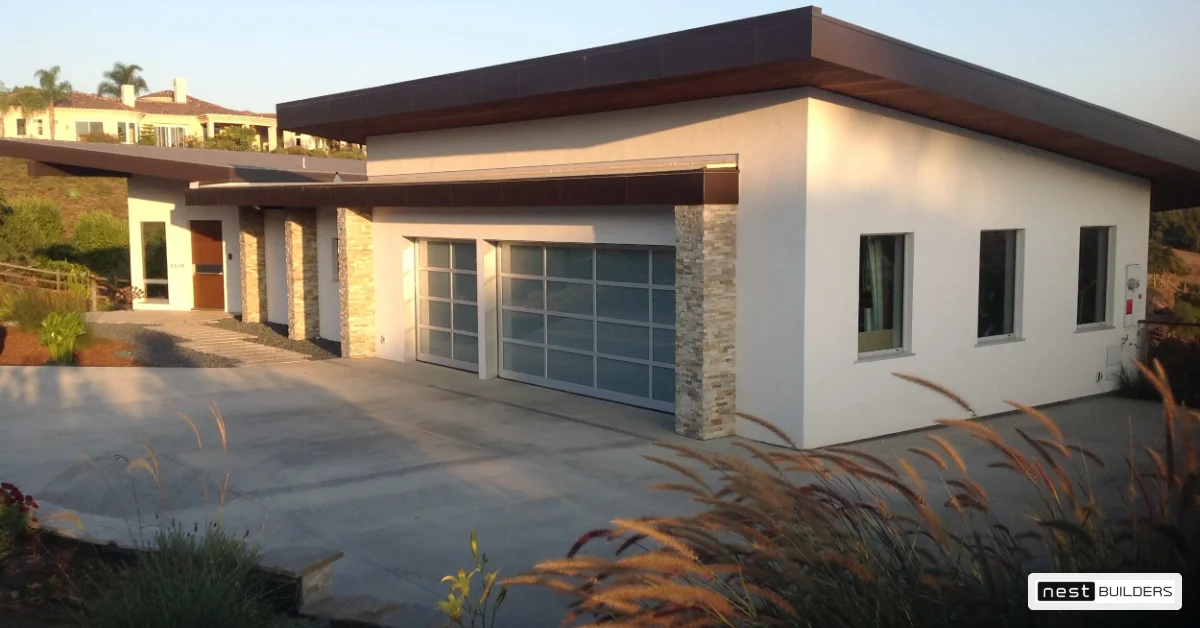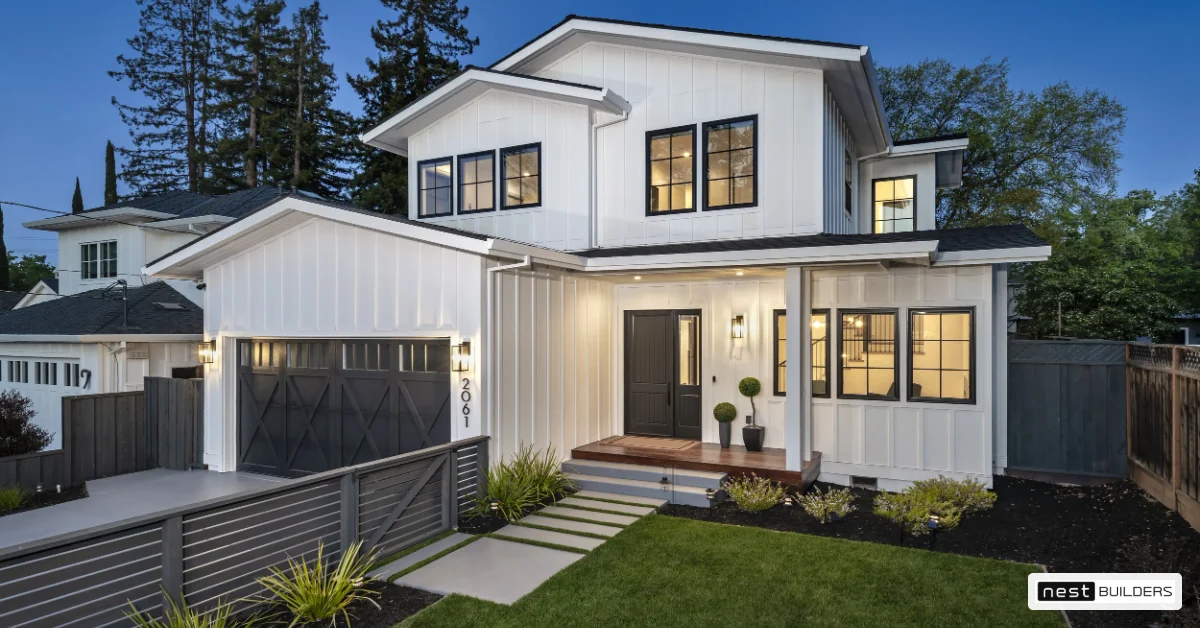
Fire-resistant homes in California use a Class A roof, ember-resistant vents, noncombustible siding, tempered dual-pane windows and a cleared five-foot zone around the walls. In high fire hazard areas, these features are required by state building code. Research cited by IBHS and CAL FIRE shows core hardening can cost under $3,000 when planned into a new build. See our modular homes in California built to these rules.
Key Takeaways
- Embers are the main threat: most homes ignite from wind-blown embers, not the fire front.
- The code is already strict: new homes in fire hazard zones must use ignition-resistant construction.
- Zone 0 is new: state rules now target the first five feet around the home.
- Hardening is affordable in new builds: adding it at design stage costs far less than a retrofit.
- Modular can meet the same rules: factory-built homes follow the same California code.
Why Fire-Resistant Homes Matter in California
Wildfire is now a year-round planning issue across much of the state. The January 2025 fires in Los Angeles County destroyed thousands of homes, and earlier fires hit Sonoma, Butte and Shasta counties hard. Buyers, lenders and insurers all look more closely at how a new house is built.
Fire-resistant homes are not fireproof. The goal is to stop embers and heat from finding a weak spot long enough for the fire to pass. Homes built this way survive far more often, and they can also help protect the houses next door.
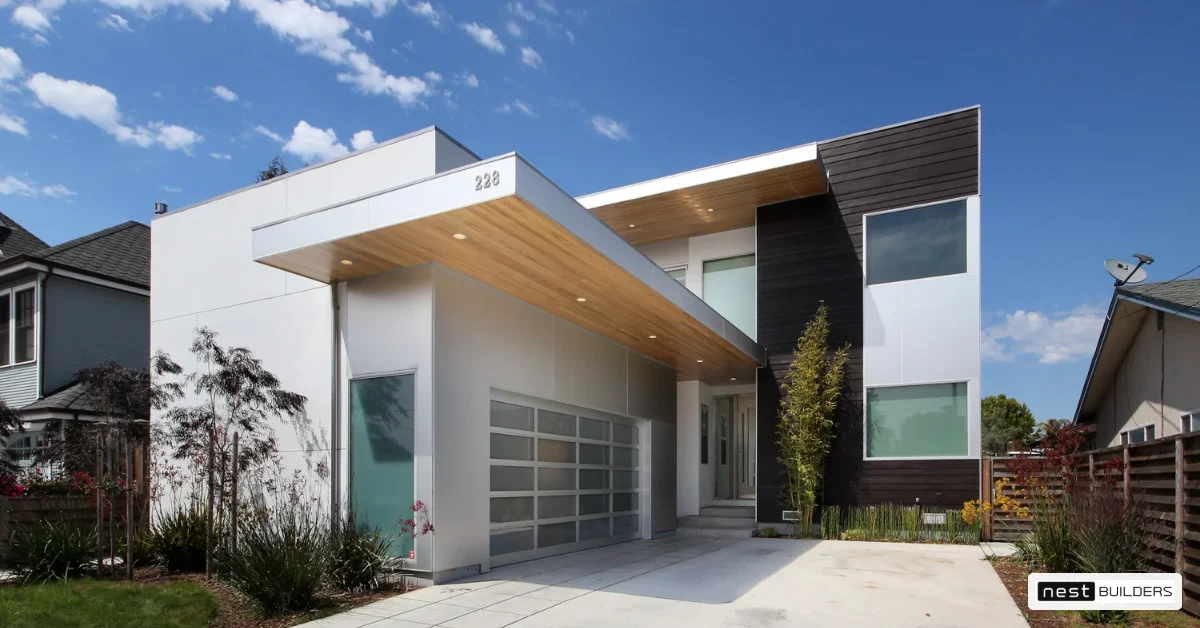
How Homes Actually Catch Fire
Understanding the threat makes choosing materials for fire-resistant homes easier. Homes ignite in three main ways:
- Embers: burning bits carried by wind land in vents, gutters, decks and mulch beds, sometimes far ahead of the flames.
- Radiant heat: intense heat from nearby burning plants or buildings cracks windows and ignites siding.
- Direct flame: fire spreads along plants, fences or wood piles right up to the walls.
Embers cause the majority of losses, which is why so many code rules focus on closing small gaps and keeping the area next to the house free of fuel.
The California Rules for Fire-Resistant Homes
California has had wildfire building standards since 2008, in Chapter 7A of the California Building Code. They apply to new homes in designated Fire Hazard Severity Zones and certain wildland-urban interface areas. From January 1, 2026, the state also adopted its first California Wildland-Urban Interface Code as Part 7 of Title 24, which carries these construction rules forward.
The key requirements for a new home include:
- Class A roof assembly with noncombustible or covered gutters
- Ember-resistant vents for attics, eaves and crawl spaces
- Ignition-resistant or noncombustible exterior walls
- Dual-pane windows with at least one tempered pane
- Ignition-resistant decks and enclosed eaves where required
On top of building code, state law requires 100 feet of defensible space around homes in hazard areas, split into zones. CAL FIRE’s defensible space guide explains each zone in plain terms.
What Zone 0 Means for New Homes
Zone 0 is the ember-resistant area within five feet of the home. On August 19, 2026, the state Board of Forestry adopted emergency rules for this zone. In short, the first five feet should be free of combustible materials such as wood mulch, dense plants and wooden fences attached to the house. Start dates depend on whether the structure is new or existing and on local rules, so check the current Zone 0 rule status on the Board of Forestry site.
For a new build, Zone 0 is easy to plan from day one with gravel, pavers or concrete next to the walls.
Best Materials for Fire-Resistant Homes
| Part of the home | Fire-resistant choices | What to avoid |
|---|---|---|
| Roof | Class A asphalt shingles, metal, concrete or clay tile | Untreated wood shakes |
| Siding | Fiber cement, stucco, brick, metal | Vinyl, untreated wood |
| Windows | Dual-pane with tempered glass, metal or fiberglass frames | Single-pane glass, vinyl frames in high heat |
| Vents | Ember-resistant vents with fine metal mesh or baffles | Open vents with wide screens |
| Decks | Ignition-resistant composites, metal framing, concrete | Untreated wood decking with open undersides |
| Gutters | Metal with covers | Plastic gutters full of leaves |
| Five-foot zone | Gravel, pavers, concrete | Bark mulch, shrubs against walls |
In fire-resistant homes, small details often decide the outcome. Boxed-in eaves, sealed gaps where roofing meets walls and metal flashing at the base of siding all reduce places for embers to collect.
What Fire-Resistant Construction Costs
Cost is the first question most buyers of fire-resistant homes ask. For new construction, the answer is often less than expected. Offsite Builder Magazine reports IBHS wildfire research findings showing core wildfire resistance can be built for under $3,000, in site-built or modular homes.
That number covers smart choices made at design stage, such as ember-resistant vents and noncombustible materials near the ground. Premium upgrades like full metal roofing, fire-rated glazing or masonry walls cost more, and the price depends on the size and style of the home.
Retrofitting an existing house is a different story. Replacing a roof, siding and windows on a finished home can cost far more than choosing the right materials before the first wall goes up. That is one reason many owners in fire-prone areas choose to build new.
Can a Modular Home Be Fire-Resistant?
Yes. In California, modular homes are factory-built housing, and they must meet the same state building standards as site-built homes, including wildfire rules where the lot requires them. The factory simply builds the parts indoors, then the home is set on your foundation and finished on site.
Factory building also helps with quality. Vents, window installs and wall layers are fitted in a controlled setting, which makes it easier to seal the small gaps embers exploit. For a wider comparison, read our guide to modular vs stick-built homes. If you own land in a fire area, our factory-built homes in California can be specified with fire-resistant packages from the start.
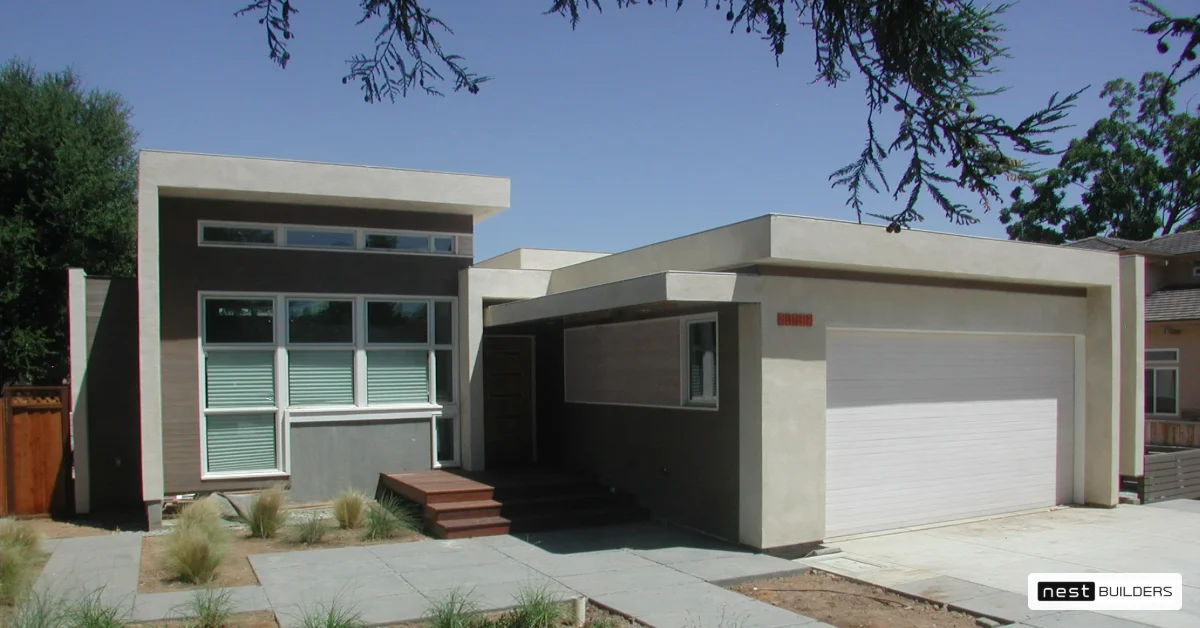
Design Choices That Help a Home Survive
Materials are only part of what makes fire-resistant homes work. Smart design adds another layer of protection:
- Simple roof lines: fewer valleys and dormers mean fewer places for debris to pile up.
- Boxed eaves: enclosed soffits keep embers from lodging under the roof edge.
- Smart window placement: limit large glass facing the slope where fire is most likely to come from.
- Detached outbuildings: keep sheds and garages away from the main house.
- Hard surfaces near the house: patios and walkways work as a built-in Zone 0.
- Water access: a reachable hose bib and clear driveway help firefighters.
Fire-Resistant Homes Across California’s Regions
Fire risk is not the same everywhere in the state, and the right package depends on where your lot sits.
In the Sierra foothills and Northern California, homes often sit in dense forest with steep slopes. Wide defensible space, metal or tile roofs and ember-resistant vents are the priorities.
In the Bay Area hills and Sonoma and Napa, homes are often close together on wooded hillsides. Fire can spread from house to house, so noncombustible siding, tempered glass and a clean five-foot zone matter a lot.
In Southern California, strong seasonal winds push embers long distances. Ember protection, boxed eaves and hard surfaces near the walls are the main defenses, along with plant choices that stay green and low.
In each region, a builder who knows the local fire hazard maps and plan check rules can design the right level of protection without overspending on features your lot does not need.
Fire-Resistant Homes and Insurance
Home insurance in high-risk parts of California has become harder to find. While no feature guarantees coverage, insurers increasingly ask about roof type, vents, defensible space and Zone 0. Documenting the fire-resistant features of your new home, with photos and the approved plans, gives you something concrete to show an agent.
Frequently Asked Questions
Are fire-resistant homes required in California?
New homes in designated Fire Hazard Severity Zones and certain wildland-urban interface areas must meet state ignition-resistant construction rules. Outside those areas, the features are optional but recommended.
What is the most important fire-resistant feature?
Protection against embers. A Class A roof, ember-resistant vents and a clear five-foot zone around the home block the most common ways houses ignite.
How much does it cost to make a new home fire resistant?
Research from IBHS and CAL FIRE suggests core features can be added for under $3,000 in a new build. Premium materials raise the cost.
Do modular homes meet California wildfire codes?
Yes. Factory-built homes in California follow the same state building standards as site-built homes, including wildfire rules when the lot requires them.
What is Zone 0?
Zone 0 is the five-foot area around a home that state rules aim to keep free of combustible materials, so embers cannot ignite the structure.
Build a Fire-Resistant Home With Nest Builders
Whether your lot is in the Sierra foothills, the Bay Area hills or Southern California, we design, permit and build homes that meet California wildfire codes. Call Nest Builders at (888) 637-8238 or contact our team for a free review of your lot and a fire-resistant plan that fits your budget.
Nest Builders
100 Shoreline Hwy, Suite 100, Bldg B
Mill Valley, CA 94941
Phone: (888) 637-8238
Email: info@nestbuilders.co
Web: https://nestbuilders.co/
License: CSLB# 1117837, HCD# DL1611393
Serving the Bay Area, Sacramento, Los Angeles and San Diego
Hours: Mon to Sun, 9:00 AM to 5:00 PM
Nest Builders is a licensed California home builder (CSLB# 1117837, HCD# DL1611393) that designs, permits and builds custom and modular homes across California. Learn more on our about us page.