Modular vs Stick-Built Homes in California: Cost, Speed and Quality
A modular home vs stick built home in California comes down to time, control and your lot. Both must meet the same California building code. Modular is usually faster because the home is built in a factory while your site is prepared. Stick-built gives you more on-site flexibility. Browse our modular home lineup to see what a factory-built plan looks like.
Key Takeaways
- Same code, different build site. California modular homes meet the same state building standards as stick-built homes.
- Modular is usually faster. Factory and site work happen at the same time.
- Cost is closer than most people think. The savings come from time and fewer surprises, not a cheap box.
- Stick-built wins on odd lots and one-off designs. Tight access and very custom shapes favor building on site.
- Lenders treat modular like site-built when it sits on a permanent foundation.
What Is the Difference Between Modular and Stick-Built?
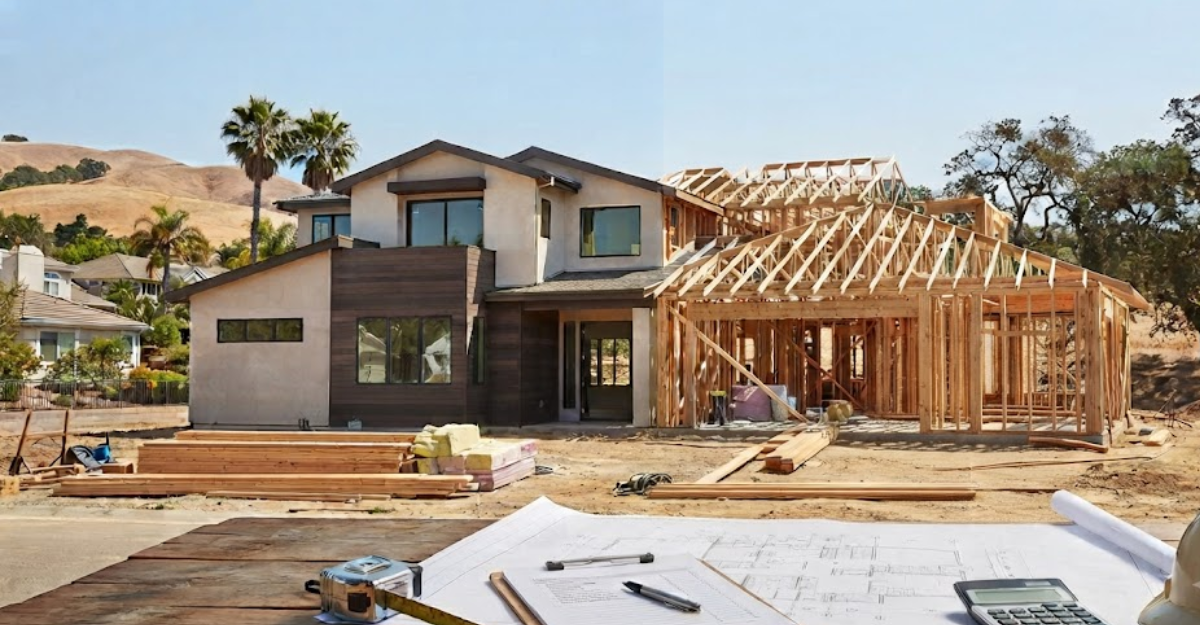
A stick-built home is framed piece by piece on your lot. Lumber arrives, crews frame the walls, and every trade works outside in the weather.
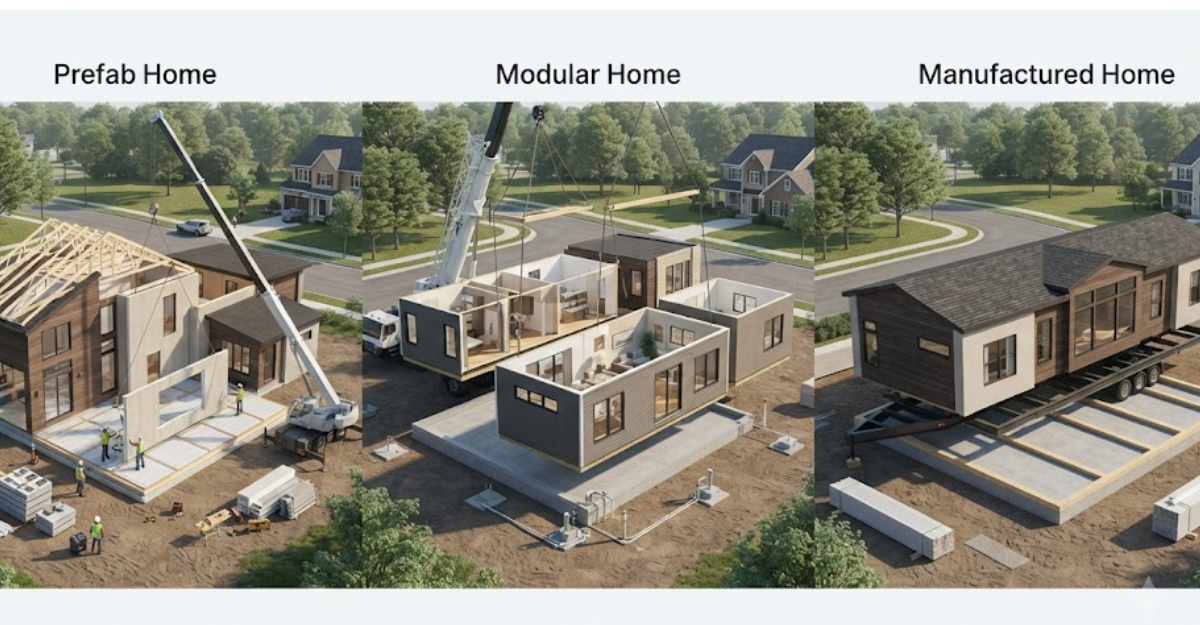
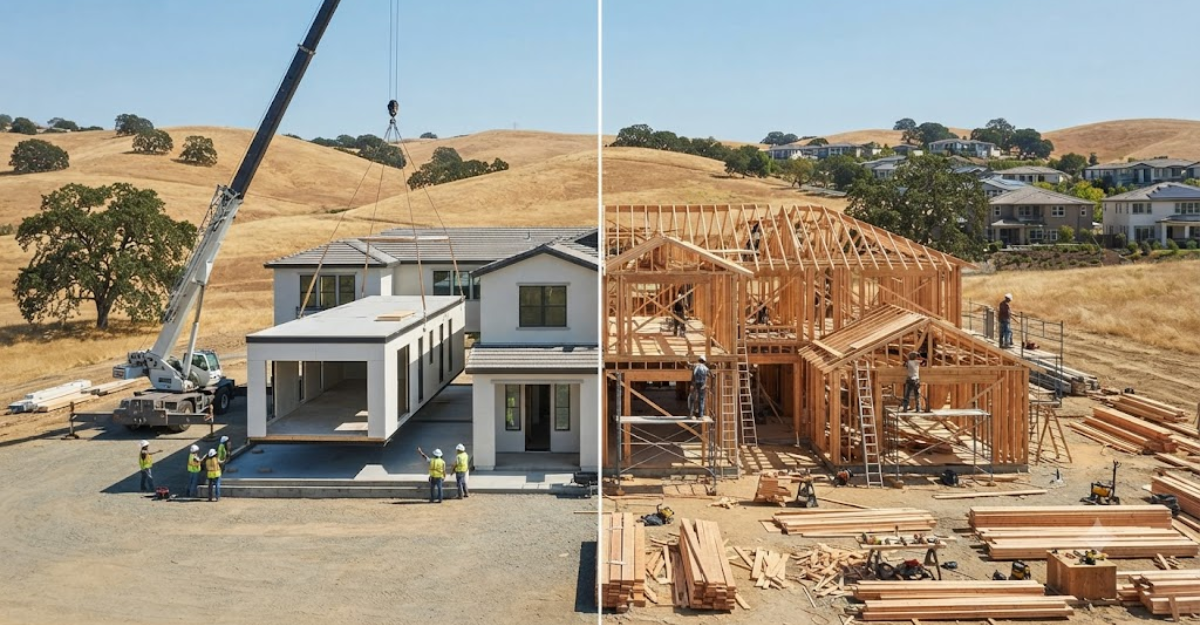
A modular home is built in sections, called modules, inside a factory. Each module is framed, insulated, wired and finished indoors. The modules are then trucked to your lot and set on a permanent foundation by crane. Crews join them and finish the connections on site.
Stick-built is still the norm. The U.S. Census Bureau found that 97 percent of new single-family homes completed in 2025 were site-built, and only about 1 percent were modular. That data is in the Census construction method tables. Modular is a small share, but it is growing in states with high labor costs, like California.
| Factor | Modular home | Stick-built home |
|---|---|---|
| Where it is built | Factory, then set on site | Entirely on your lot |
| Building code in California | California Building Standards Code | California Building Standards Code |
| Foundation | Permanent foundation | Permanent foundation |
| Nest Builders timeline | 10 to 12 months | 12 to 14 months (custom) |
| Weather exposure | Low, framing stays indoors | High during framing |
| Design flexibility | High within module sizes | Highest, almost no limits |
| Best lot type | Truck and crane access | Any lot, including tight access |
Cost: Is Modular Cheaper Than Stick-Built in California?
Sometimes, but not always per square foot. A well-finished modular home and a well-finished stick-built home can land close together. The real savings show up in three places.
Where modular saves money
- Loan interest: a shorter build means fewer months of construction loan payments.
- Rent while you wait: moving in sooner cuts what you pay to live elsewhere.
- Fewer change orders: choices are locked before the factory builds, so surprises drop.
- Less waste: factories cut and reuse material more efficiently than an open site.
Where stick-built can cost less
- Hard-to-reach lots where a crane set would be costly.
- Very simple, small homes built by a local crew with low overhead.
- Areas close to a lumber supplier with steady trade availability.
For a full breakdown of what drives the price, see our modular home price guide. For custom site builds, Nest Builders homes start from $400 per square foot for the Traditional style and $600 for Modern.
Speed: How Much Faster Is Modular?
Speed is the clearest advantage. On a stick-built job, the foundation must be finished before framing starts. On a modular job, the factory builds the home while the foundation is poured.
The Modular Building Institute says this overlap can cut a project schedule by 30 to 50 percent. You can read how that works on the Modular Building Institute timelines page. In California, permits and plan check still take the same time for both methods, so your total savings depend on your city.
Step by step: how the two schedules compare
- Design and permits: about the same for both. A pre-approved model can shorten design.
- Site work: modular site work runs at the same time as the factory build. Stick-built waits for it.
- Framing and dry-in: modular happens indoors. Stick-built happens outside and can stall in rain.
- Set day: modular modules are craned into place, often in a day or two.
- Finish work: both need on-site finishing, hookups and final inspection.
Quality: Are Modular Homes Built as Well?
A good modular home is often built stronger than it needs to be. Each module must survive a truck ride and a crane lift. That means extra framing, glue and fasteners that a site-built wall never gets.
Quality checks that favor modular
- Dry materials: lumber is not rained on during framing.
- Repeatable process: the same crew builds the same way, with jigs and checklists.
- Factory inspections: each home is inspected in the plant before it ships.
- State insignia: California factory-built homes carry a state insignia showing they passed review.
Warning signs of a poor build, either method
- Gaps or uneven floors where modules or walls meet.
- Cracked drywall soon after move-in.
- Doors that stick or windows that do not close cleanly.
- No written warranty covering both the structure and the site work.
Quality depends on the builder more than the method. A careless site crew and a careless factory can both build a bad house.
Want to see how a modular plan is finished? Call Nest Builders at (888) 637-8238 and ask to walk through a model’s specs, from framing to finishes. We can explain which method fits your lot.
California Rules That Affect Both Methods
California adds requirements that many national articles skip. They apply to modular and stick-built homes the same way.
- Energy code: California’s 2025 energy standards took effect on January 1, 2026, as noted by the California Energy Commission. Most new single-family homes need solar.
- Wildfire rules: homes in fire hazard zones need ember-resistant roofs, vents and siding.
- Seismic design: both methods must meet California’s earthquake standards.
- Local zoning: setbacks, height limits and design review apply no matter how the home is built.
Modular can help with energy code. Factory walls are built with tight seams and consistent insulation, which makes air sealing easier to pass on inspection.
Design Freedom: How Custom Can Each Be?
Stick-built homes have almost no shape limits. If you want curved walls, huge open spans or a home that wraps around a hillside, site-built is the natural fit.
Modular homes are more flexible than most people expect. Plans can be single-story or two-story, with open kitchens and large windows. A plan like the single-story Sonoma offers 1,860 square feet, 3 bedrooms, an office and an optional deck. Most modular plans can be adjusted with different finishes, window packages and room layouts.
| Design goal | Better fit |
|---|---|
| Proven layout, faster move-in | Modular |
| Very large open spans | Stick-built |
| Steep or unusual lot shape | Stick-built |
| Predictable price early | Modular |
| Signature architectural style | Either, with a design-build team |
Financing, Appraisal and Resale
Many buyers worry that banks treat modular homes differently. When a modular home sits on a permanent foundation and meets local code, most lenders treat it like any other house.
Fannie Mae’s rules say modular homes have no minimum width, size or roof pitch requirements, and appraisers do not need comparable sales of the same build type. You can check this in the Fannie Mae Selling Guide. The confusion usually comes from manufactured homes, which follow a different federal code and loan rules.
If you are unsure how the home types differ, our guide to types of factory-built homes explains each one.
Three Common California Situations and the Better Fit
These are typical buyer situations, not specific clients. They show how the lot and the goal usually decide the method.
A flat suburban lot in the Sacramento area
The lot has street access, a sewer line and no slope. A crane can park at the curb. This is the easiest case for modular. Site prep is simple, and the factory schedule can shave months off move-in. Stick-built also works here, but it rarely beats modular on time.
A hillside lot in the Bay Area
The road is narrow, the lot slopes, and trees block the build spot. A crane set may need street closures or a larger crane. Stick-built is often the better fit. If modular is still the goal, the builder should check crane reach and module size limits before any design work starts.
A fire rebuild in Los Angeles County
The family wants to move home as fast as possible. The old foundation may or may not be reusable. Modular can shorten the time to move-in, as long as the plan meets current fire and energy rules. Permit timing and utility restoration often decide the real schedule.
Lifespan, Upkeep and Insurance
Once a modular home is set and finished, you maintain it like any other house. Roofs, paint, water heaters and HVAC systems wear out on the same schedule.
- Lifespan: a code-built home on a permanent foundation is designed to last for generations with normal care.
- Upkeep: check the seams where modules join during the first year, and seal any hairline drywall cracks.
- Insurance: most insurers write the same homeowners policy for modular and stick-built homes on permanent foundations.
- Property tax: in California, the home is assessed as real property, the same as a site-built house.
Common Myths About Modular Homes
Myth: modular homes are the same as mobile homes
They are not. Mobile and manufactured homes follow a federal code and sit on a steel chassis. California modular homes follow the state building code and sit on a permanent foundation.
Myth: modular homes all look the same
Modern modular plans come in many styles, with two-story options, porches, large windows and custom finishes. Once finished, most people cannot tell a modular home from a site-built one.
Myth: modular homes lose value
A modular home on a permanent foundation is appraised like other homes in the area. Its value follows the local market, the lot and the condition of the home.
Myth: you cannot change a modular plan
Most plans can be adjusted with layout changes, finish upgrades and different window packages. The key is to make those choices before the factory order.
How to Choose Between Modular and Stick-Built
- Check your lot access. Can a truck and crane reach the build spot? If not, lean stick-built.
- Set your move-in date. If time matters, modular usually wins.
- List your must-have design features. Unusual shapes favor stick-built.
- Price both with the same scope. Include foundation, utilities, fees and finishes in each quote.
- Talk to your lender. Confirm the draw schedule works with a factory deposit.
- Pick a builder who offers both. They will recommend the method that fits, not the only one they sell.
Modular Home vs Stick Built FAQs
What is the downside of modular homes?
The main downsides are lot access and module size limits. A truck and crane must reach your site, and very unusual shapes are harder to build in modules. You also need to lock design choices early, because changes after the factory order are costly.
Do modular homes last as long as stick-built homes?
Yes. A modular home built to the California code and set on a permanent foundation should last as long as a stick-built home. Its lifespan depends on build quality, the foundation and regular upkeep, the same as any house.
Is it cheaper to build a house or get a modular?
Modular is often cheaper overall because the shorter schedule cuts loan interest and rent. Per square foot, the two can be close. Your lot, finish level and local fees decide which method costs less for your project.
Why don’t banks like modular homes?
Most banks do finance modular homes. The concern usually comes from manufactured homes, which are built to a different code and may lack a permanent foundation. A modular home on a permanent foundation is generally financed and appraised like a site-built home.
How much does a 2,000 square foot modular home cost?
In California, a finished 2,000 square foot modular home often costs $500,000 to $800,000 or more, not counting land. Foundation, utilities, permits and finish level move the number the most. A site visit gives you a real estimate.
Find Out Which Build Method Fits Your California Lot
The right choice depends on your land, your timeline and your design. Call Nest Builders at (888) 637-8238 and share your lot address and move-in goal. We build both modular and custom site-built homes, so we will tell you which method makes more sense and why. You can also learn more about our building team.